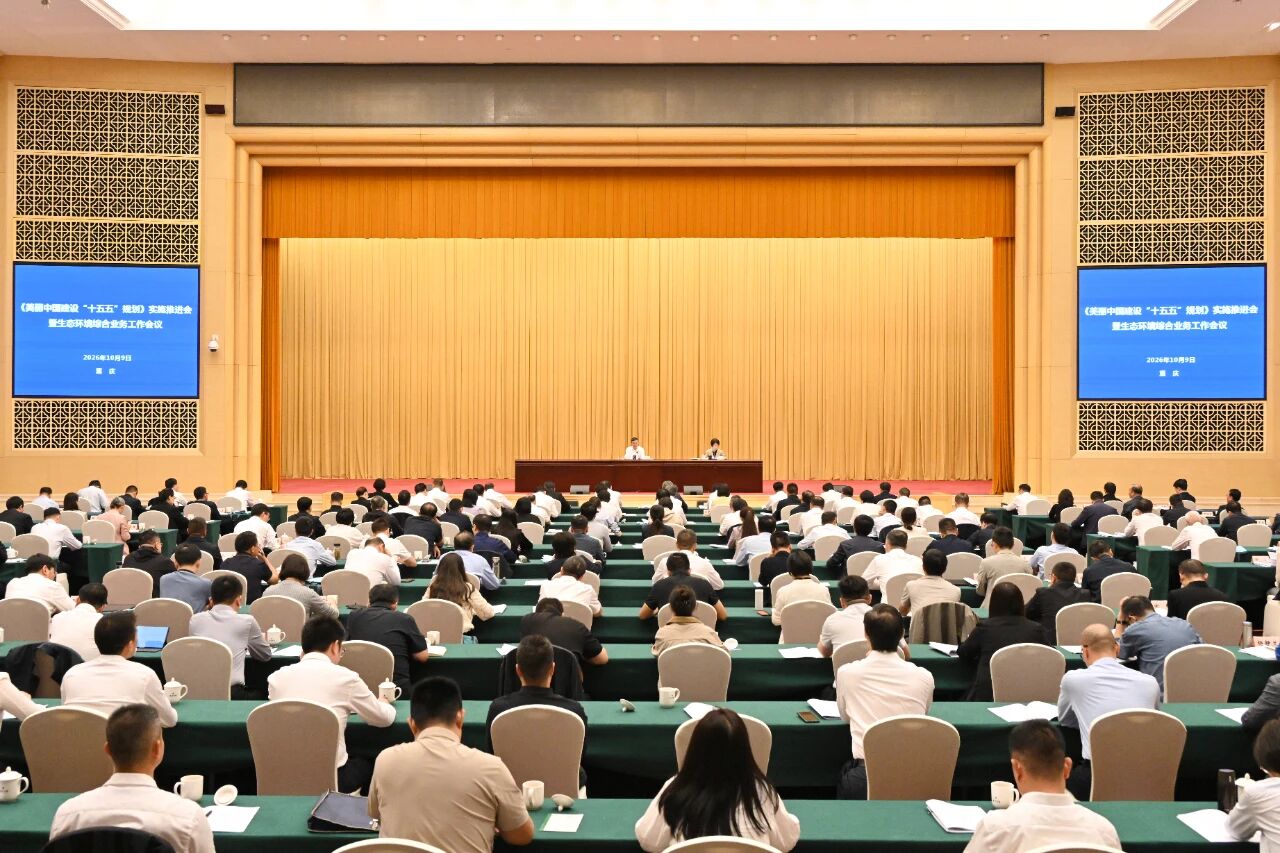
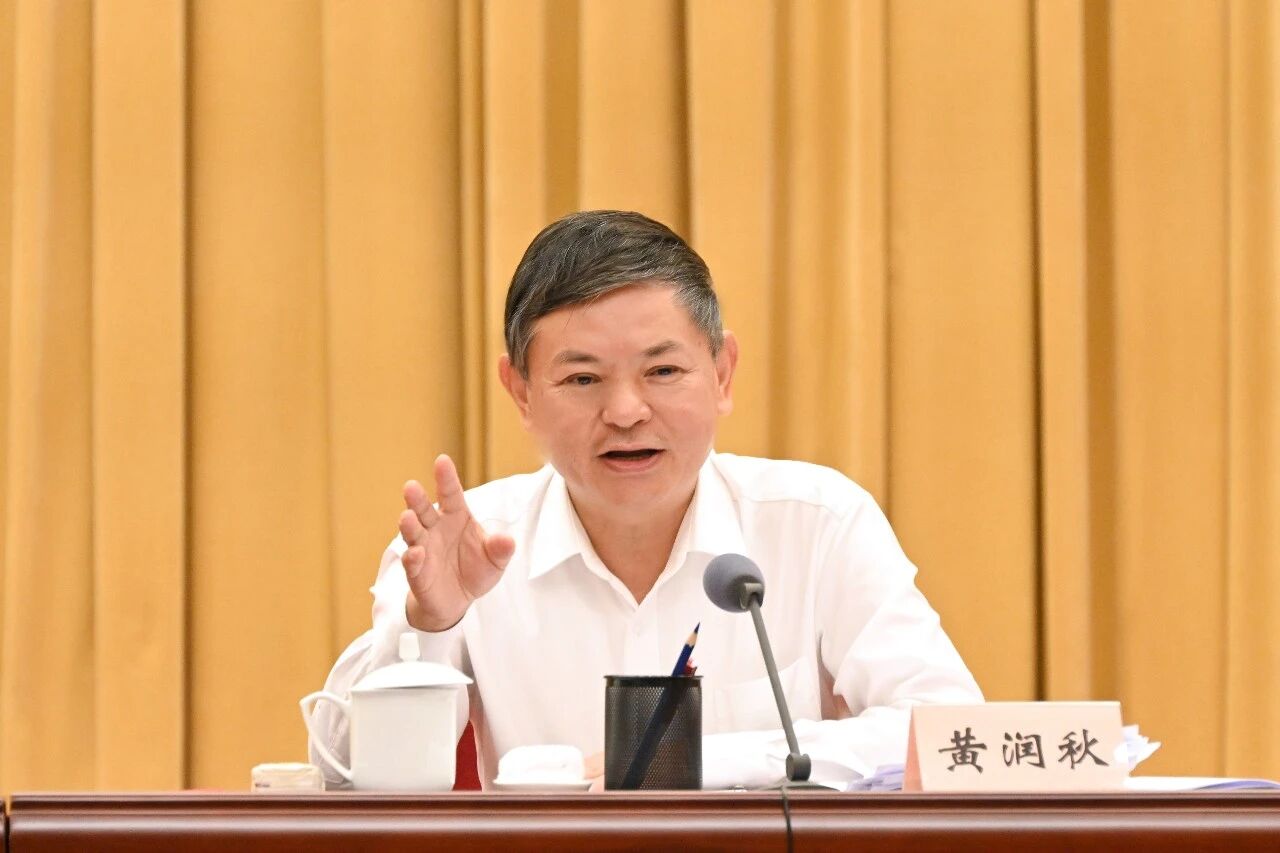
On October 9, the Ministry of Ecology and Environment convened in Chongqing a meeting to advance the implementation of the “15th Five-Year Plan” for Building a Beautiful China (hereinafter referred to as the “Plan”) and a conference on comprehensive ecological and environmental work. Minister Huang Runqiu of the Ministry of Ecology and Environment attended the meeting and delivered a speech.
Huang Runqiu pointed out that General Secretary Xi Jinping attaches great importance to ecological civilization construction and environmental protection, has delivered numerous important speeches, and issued a series of significant instructions and directives, thereby providing clear guidance and fundamental principles for comprehensively advancing the building of a Beautiful China. The Plan adheres to the guidance of Xi Jinping Thought on Socialism with Chinese Characteristics for a New Era, particularly Xi Jinping’s Thought on Ecological Civilization, and thoroughly implements the decisions and arrangements of the CPC Central Committee and the State Council, making specific plans for the goals and tasks of building a Beautiful China during the 15th Five-Year Plan period. The Plan, in light of the new circumstances and requirements, coordinates efforts to reduce carbon emissions, mitigate pollution, expand green spaces, and promote economic growth, thereby driving a systemic leap forward during the 15th Five-Year Plan period—from a focus on environmental governance to the comprehensive advancement of Beautiful China construction. The Plan is grounded in advancing a modernization characterized by harmonious coexistence between humanity and nature, emphasizing source-control prevention, normative guidance, market-driven incentives, and technology-enabled solutions, with a focus on leveraging high‑level environmental protection to promote high‑quality development. The Plan upholds the development philosophy of putting the people at the center, focuses on addressing pressing ecological and environmental issues in people’s immediate surroundings, and continuously enhances the public’s sense of gain, happiness, and security in relation to the ecological environment. It is essential to deeply understand the significant importance and far-reaching implications of the issuance of the Plan, to coordinate the medium- and long-term strategic vision for a Beautiful China with the phased goals and tasks for the 15th Five-Year Plan period, and to make every effort to ensure the effective implementation of the Plan.
Huang Runqiu emphasized the need to uphold and strengthen the Party’s overall leadership over the building of a Beautiful China, firmly establish and practice a correct view of political achievements, improve the working mechanism of central coordination, provincial-level overall responsibility, and city- and county-level implementation, and, with the spirit of perseverance, ensure that the tasks outlined in the Plan are effectively translated into tangible governance outcomes. First, we will wage a sustained and decisive battle to safeguard blue skies, clean waters, and uncontaminated soil. We will implement measures to ensure continuous improvement in air quality, vigorously advance structural, engineering, and managerial emission reductions, strengthen the protection and management of water bodies in urban and rural areas, intensify comprehensive governance of key sea areas, and deepen source-control efforts to prevent and mitigate soil pollution, thereby continuously enhancing the quality of the atmospheric, aquatic, and soil environments. Second, we will comprehensively implement actions to address solid waste and emerging pollutants, conduct in-depth investigations and remediation of illegal dumping and disposal of solid waste, as well as environmental safety hazards related to heavy metals. We will strengthen the full-life-cycle management of emerging pollutants and effectively address the shortcomings in our capacity to manage solid waste and emerging pollutants. Third, we will actively promote a green and low-carbon transformation of the development model, deepen the implementation of ecological and environmental zoning management, strengthen environmental impact assessment services and safeguards, improve the ecological and environmental standards system, fully leverage the role of the national carbon market, and make concerted efforts to optimize and adjust the industrial structure, energy structure, and transportation structure. Fourth, we will coordinate and advance the optimization of ecosystems, strengthen oversight of ecological protection and restoration, conduct in-depth nationwide and key-regional surveys and assessments of ecological conditions, implement major biodiversity conservation projects, and enhance the diversity, stability, and sustainability of ecosystems. Fifth, we will improve the institutional framework for building a Beautiful China by continuously deepening reforms of the ecological civilization system, earnestly advancing environmental protection inspections, refining the supporting systems for the Environmental Code, and consistently driving forward the “two transformations” of intelligent monitoring and non-site-based law enforcement, thereby continuously enhancing our capacity for ecological and environmental governance. Sixth, we will firmly safeguard the security baseline for building a Beautiful China by implementing the Overall National Security Concept, strengthening the ecological security barrier, establishing a modern nuclear safety regulatory system that is commensurate with the development of China’s nuclear industry, and comprehensively enhancing our capacity to prevent, respond to, and manage sudden ecological and environmental incidents.
Huang Runqiu pointed out that building a pilot zone for a Beautiful China is a major task laid down by the Party Central Committee with Comrade Xi Jinping at its core, and it bears on the overall effectiveness of the Beautiful China initiative. All relevant localities must earnestly strengthen their sense of responsibility and urgency, further ensure effective implementation and achieve tangible results, and complete the objectives and tasks for the construction of the pilot zones with high quality. First, we will strengthen demonstration and leadership by effectively leveraging the role of pilot zones as benchmarks, pioneers of reform, and drivers of wider impact. We will develop a number of exemplary cases at various levels—regional, provincial, urban, and county—to accumulate experience and set models for the comprehensive advancement of Beautiful China construction. Second, we will strengthen accountability and responsibility, promote a unified, coordinated working framework across the regional pilot zones, establish and improve the implementation mechanism for provincial-level pilot zones, and accelerate the refinement of the responsibility system for building urban and rural pilot zones, ensuring that all deployment requirements are effectively implemented and yield tangible results. Third, we will strengthen the implementation of tasks by effectively utilizing the “one form and three lists” approach for the construction of the pilot zone. We will set annual quantitative targets, refine specific projects and timelines, deepen institutional and practical innovation, enhance policy provision and effective implementation, and increase incentives and support for the development of the pilot zone. Fourth, we will strengthen the results-oriented approach, concentrate our efforts on tackling key challenges in line with the phased construction goals, promote the achievement of a number of landmark outcomes, and foster a favorable environment that encourages exploration and supports innovation. Fifth, strengthen supporting safeguards by increasing financial support for the construction of the pilot zone, planning and implementing a number of major projects, and improving the policy framework for green finance to support the pilot zone’s development.
Huang Runqiu emphasized that in recent years, the national comprehensive departments for ecological and environmental protection have thoroughly studied and implemented Xi Jinping’s Thought on Ecological Civilization, closely focused on the central tasks and served the overall national interest, fully leveraging their roles as think tanks and advisors, as well as in macro-level coordination and ensuring policy implementation, thereby achieving positive results in all areas of work. During the 15th Five-Year Plan period, the national comprehensive environmental protection authorities should take the implementation of the “Plan” as the driving force, proactively and effectively advance the thorough implementation of the CPC Central Committee’s decisions and arrangements, provide high-quality support for environmental management decision-making, and ensure the effective rollout and execution of major policies and plans, thereby continuously enhancing their overall capacity in environmental protection work. First, we will focus on effectively organizing and implementing the Plan, ensuring that responsibilities are clearly assigned and fulfilled by all parties, launching and carrying out major projects, and establishing a robust assessment and evaluation mechanism to ensure that all targets and tasks are completed on schedule. Second, we will focus on ensuring adequate funding for the implementation of the Plan by carefully planning projects, making effective use of fiscal funds, improving working mechanisms, strengthening financial support, enhancing provincial-level coordination, and diversifying funding sources, thereby adopting a multi-pronged approach to significantly increase support for ecological and environmental governance projects. Third, we will focus on effectively implementing environmental economic policies, deepen the reform of the system for legally mandated disclosure of environmental information, establish an ecological and environmental credit supervision framework, and continue to advance the pollutant discharge rights trading system. Fourth, we will focus on strengthening the analysis of the ecological and environmental situation, conduct an in-depth examination of the evolving interrelationships between the environment and the economy, continuously refine ecological and environmental statistical methodologies, bolster the supporting network infrastructure, and further expand both the depth and breadth of our situational analyses. Fifth, we will focus on strengthening regional strategic ecological and environmental protection, optimizing and improving the mechanisms for coordinated advancement across regions, deepening policy alignment, information sharing, and the synergy of measures, promoting the resolution of key and difficult regional issues, and accelerating the development of green development hubs. Sixth, we will focus on strengthening ecological security risk monitoring and early warning, ensuring the effective operation of the ecological security coordination mechanism, bolstering capacity-building for safeguards, and continuously reinforcing the ecological security defense.
Vice Minister of the Ministry of Ecology and Environment, Guo Fang, chaired the meeting and delivered a concluding speech.
At the meeting, responsible officials from the ecological environment departments (bureaus) of Shanghai Municipality, Zhejiang Province, Fujian Province, Jiangxi Province, Chongqing Municipality, and Gansu Province delivered exchange speeches.
Officials in charge from the ecological environment departments (bureaus) of all provinces, autonomous regions, and municipalities directly under the central government, as well as from the Xinjiang Production and Construction Corps Ecological Environment Bureau, attended the meeting. Officials in charge from the relevant departments and bureaus of the Ministry of Ecology and Environment, as well as its directly affiliated units, attended the meeting.